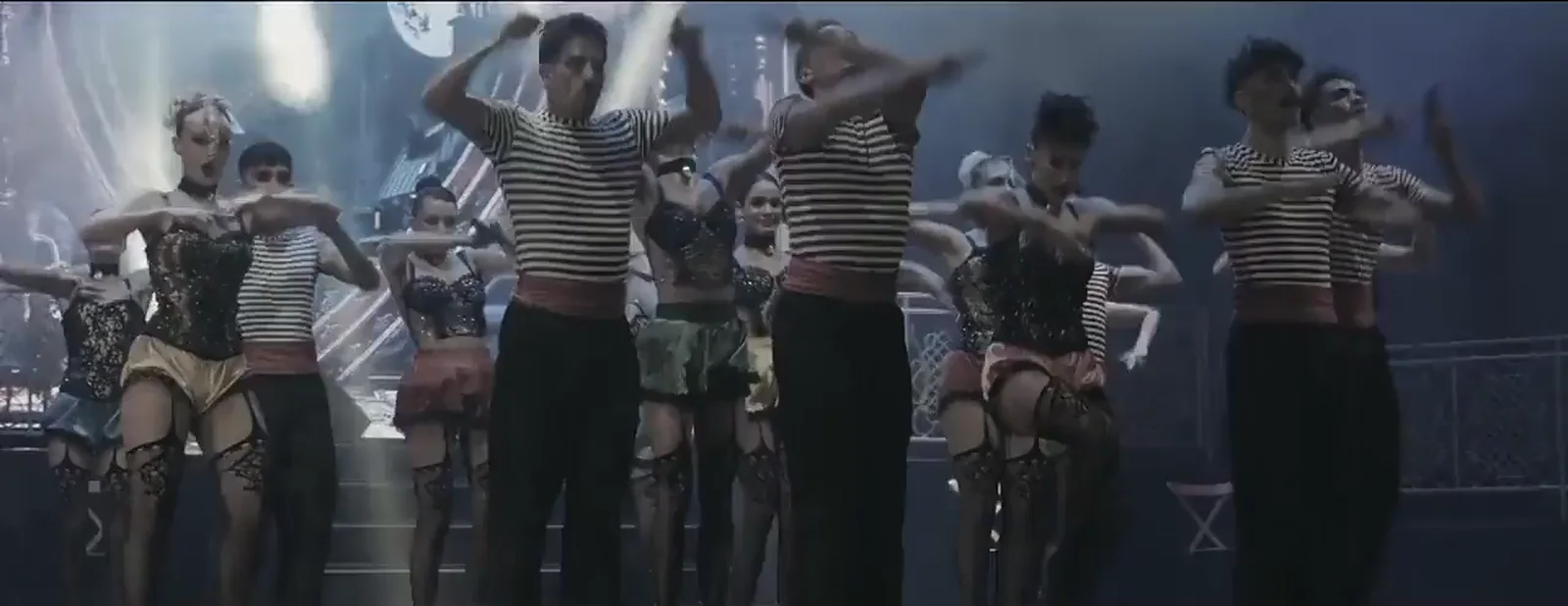
Light, sound and imageare not tools here.They are the language.
At the heart of every performance is a story told through light, sound and colour. We are the architects of that fusion: sets, audio, lighting and effects designed as one system, where technology is not an instrument bolted on at the end but a companion that amplifies the artistic experience. Behind it sits an invisible framework built for the harshest conditions a show can face.
The system is drawn before it is built
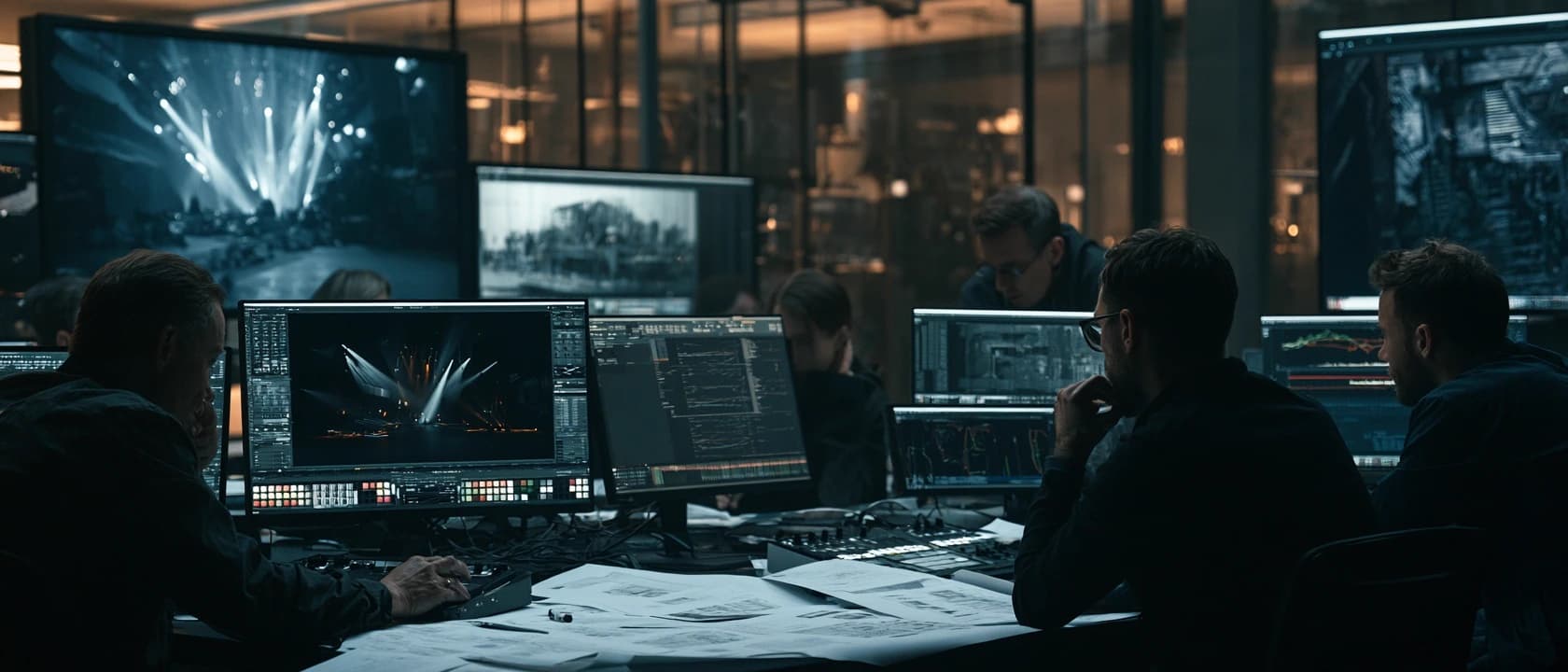
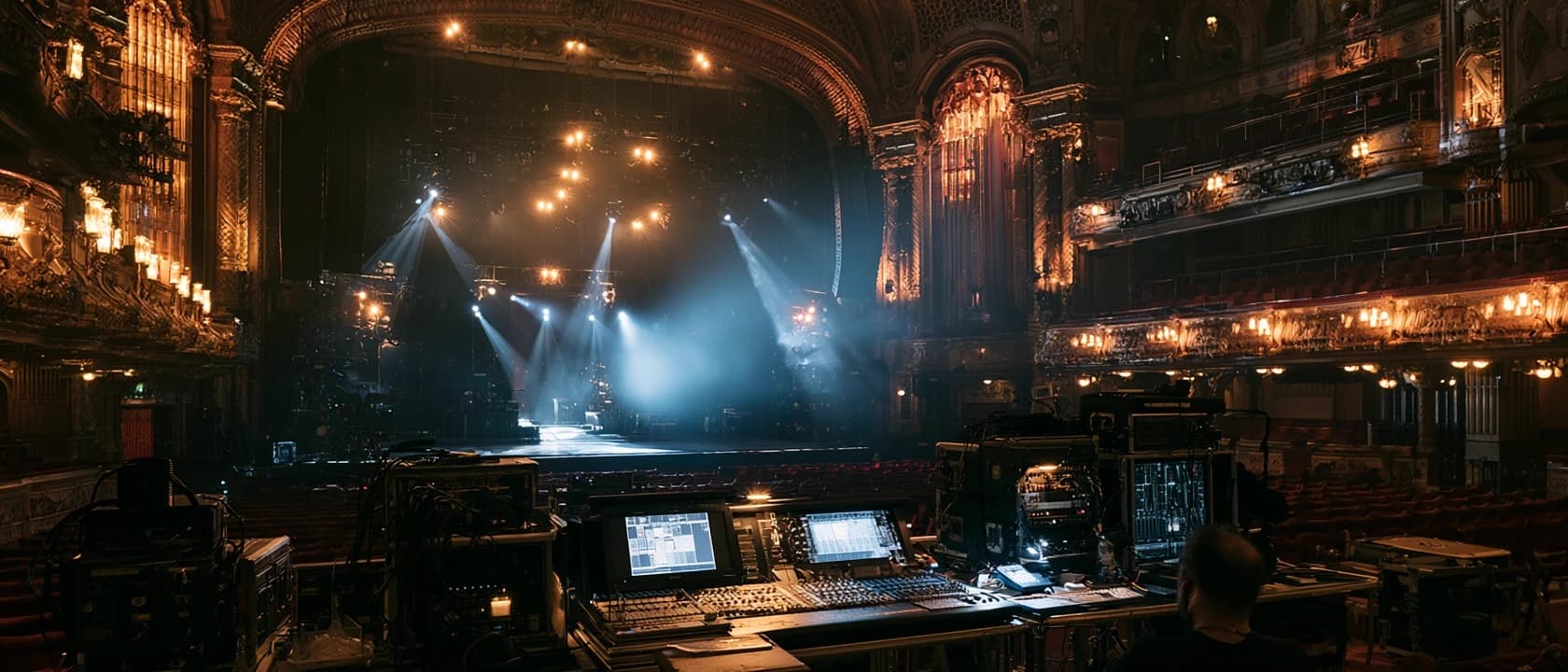
Every technical system starts on paper: concept, sketches, technical drawings and renders that show the room long before a single order goes out. The room is measured and not assumed, because the venue is surveyed with a laser scanner first, so every drawing sits inside the building as it really stands. From there the plant is tailored to that space, deciding how the gear gets in, where it disappears once it is there, how each technology enters the show and which products actually earn a place in it rather than a line on a spec sheet.
The show is lit in a digital lab first
The whole show is built as a digital twin and lit in previsualisation long before the first fixture is mounted, so the problems are solved off site. Sources are picked for high colour rendering and exact colour temperature, then tested against the fabrics and the surfaces they will hit, so the red on the sketch is the red the audience sees. Follow spots are robotic and track to the millimetre instead of being aimed by hand, and the fixtures themselves are drawn into the set from the first sketch and hidden in the structure: the source disappears, the effect does not.
Sound that follows the performer
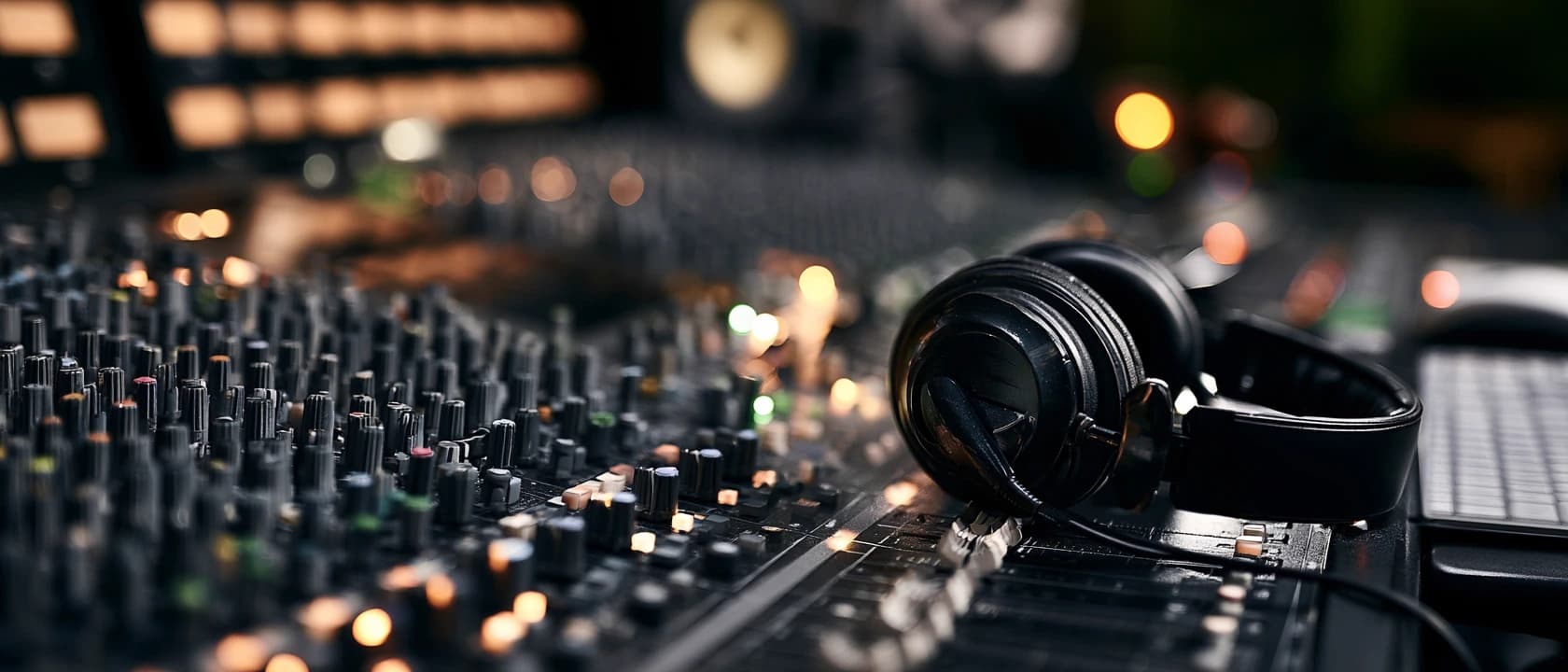
Every source is an object with a position, not a channel in a stereo mix. Performers, props and instruments carry tags that report where they are many times a second, so a voice reaches the audience from the exact point on stage where the body is standing, and goes on doing it while that body moves. The room is then tuned so that depth and direction hold from any seat, and where a sound has to reach one row and not the next, it travels there on an ultrasonic beam.
Portals, not backdrops
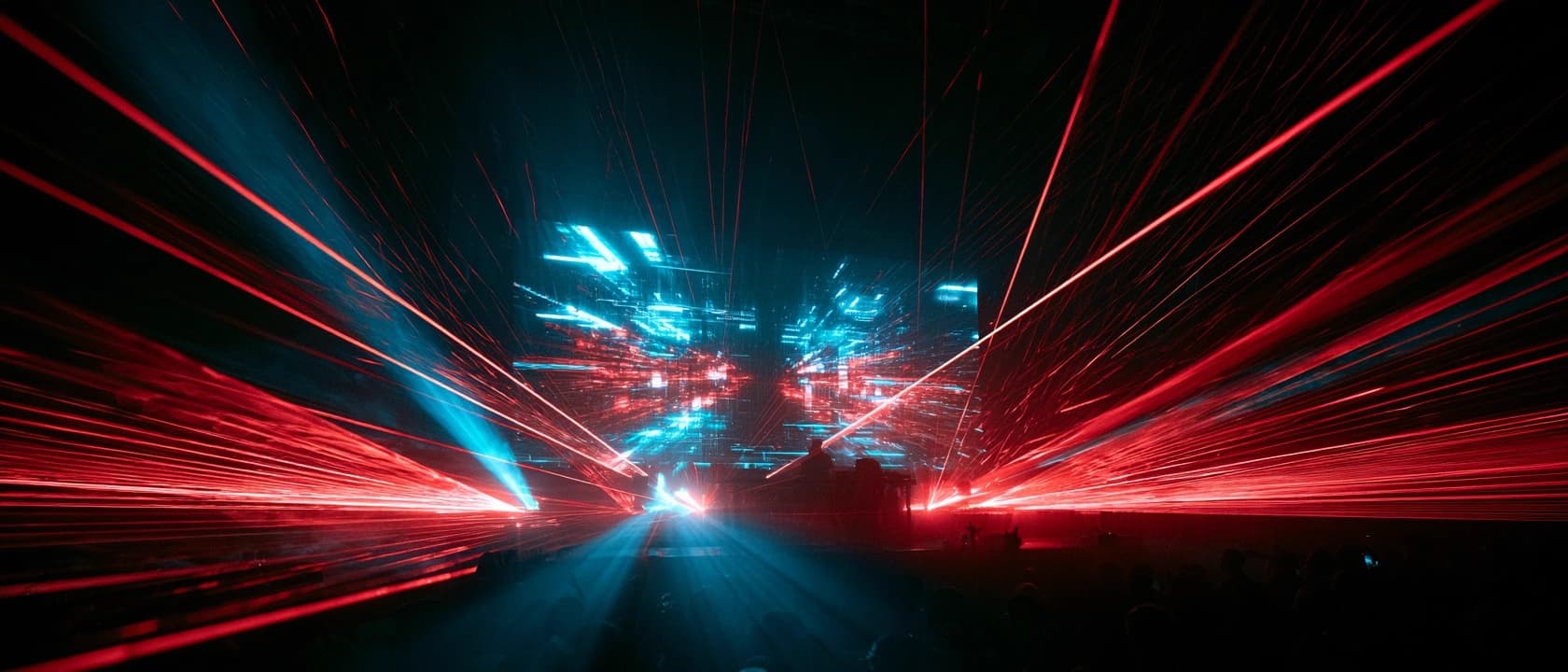
The image never comes from one screen. High resolution LED walls carry the picture, projectors wrap it around scenery and bodies with millimetre accurate mapping that keeps up when the scenery moves, and matrices of discrete LEDs become screens where a solid panel would kill the sightlines. The laser continues the image past the proscenium and into the room, locked to the video frame by frame from a single show control.
The scene changes in front of the audience
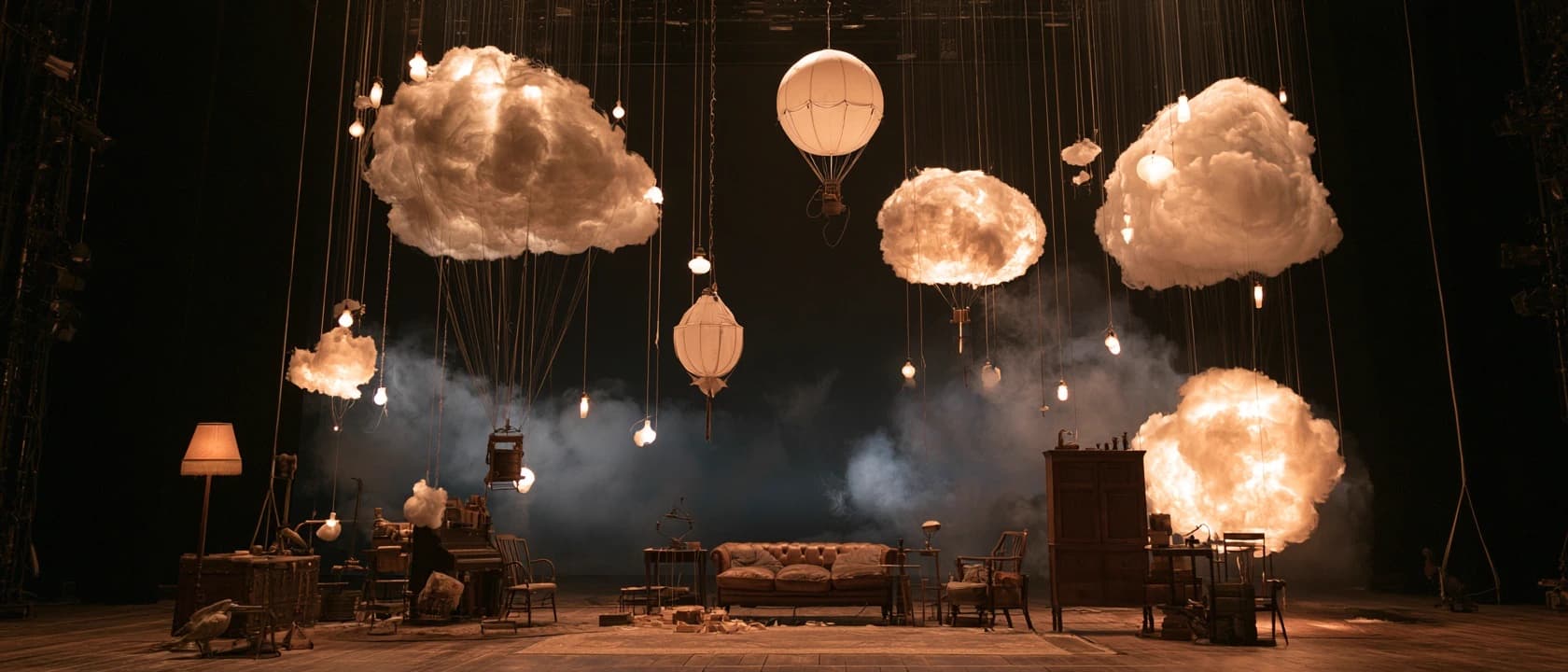
Automation moves scenery, props and performers while the audience is watching, so a change of world becomes part of the show instead of a pause in it: no blackout, no curtain. Lifts, revolves, tracked wagons and flown elements run on control software that repeats the same move to the millimetre, cue after cue, synced to the music, and the performers fly from the same desk that drives the scenery. Overhead, hundreds of independently suspended pieces turn the ceiling into scenery too.
Machines with a part in the show
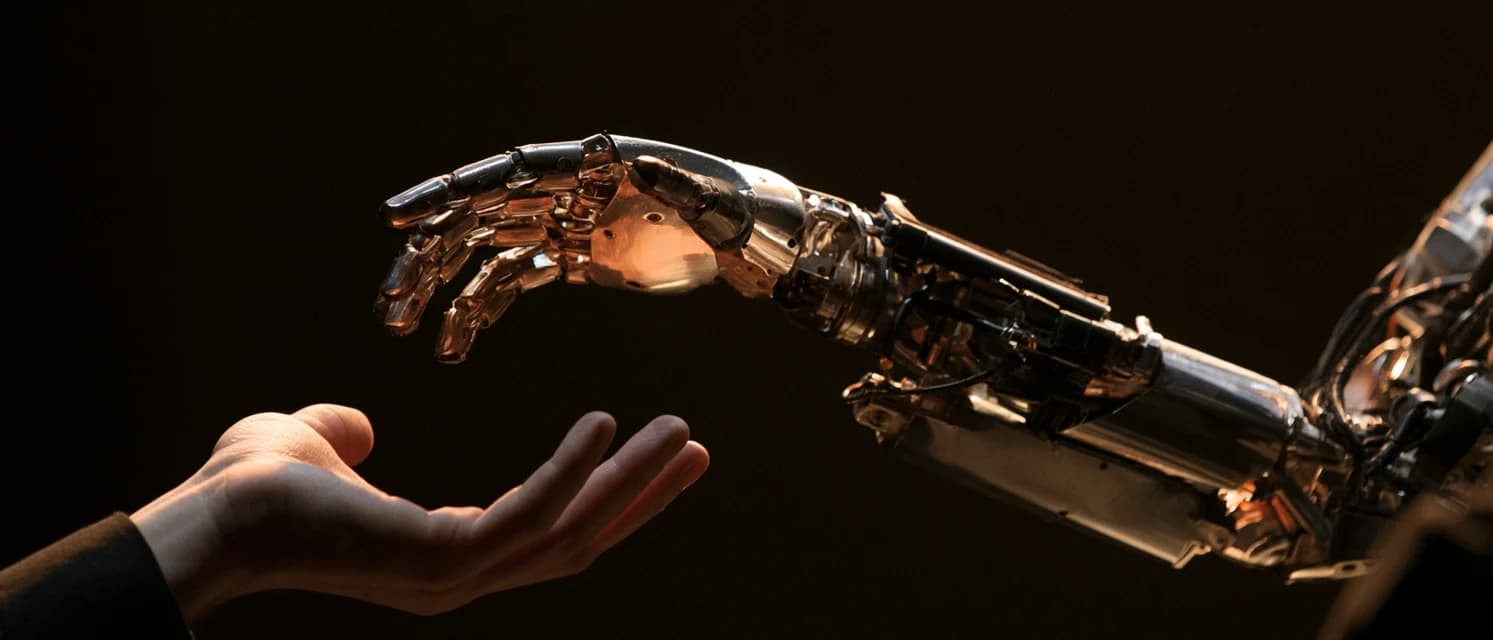
A robot is cast, not installed. Quadrupeds and humanoids walk on stage with the performers, robotic arms carry cameras, props and light through moves no operator could repeat twice, and overhead fly swarms in formation carrying light or live pyrotechnics, bionic butterflies that beat their wings so the audience sees a creature and not a machine, and helium objects with a car among them. They fly indoors as well as out: one positioning system over an open venue, another inside a theatre or a hull where satellite signal never arrives. Whatever moves on its own is not a separate act. It runs from the central show control, on the same cue as light, video and sound.
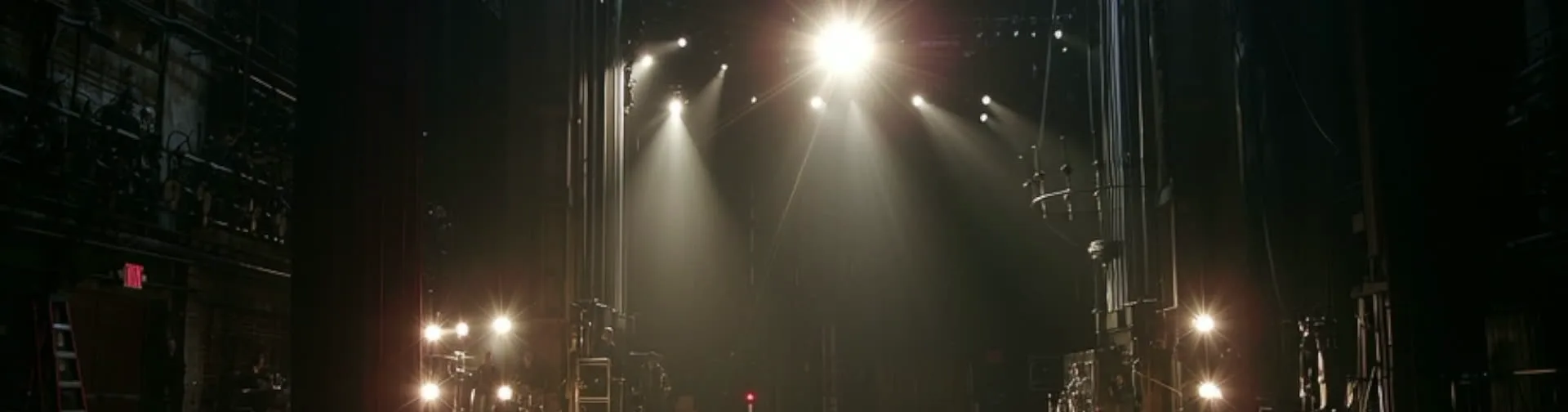
Beneath the magic lies the power. This is the nervous system of the show: we integrate hardware and software to synchronize the senses. Audio, video and networks run on invisible yet infallible tracks, ensuring every signal arrives to the millisecond.
Project Iris · Mixed Reality
R&D merging live performance with augmented reality, experienced through bespoke MR headsets, until the digital and the physical become indistinguishable.
Technology scouting
Emerging hardware identified and tested continuously.
Material research
New surfaces and textures pushing visual performance.
Process optimisation
Advanced software and workflows for precision at speed.
Future proof assets
Sustainable, durable, ready for the next generation.