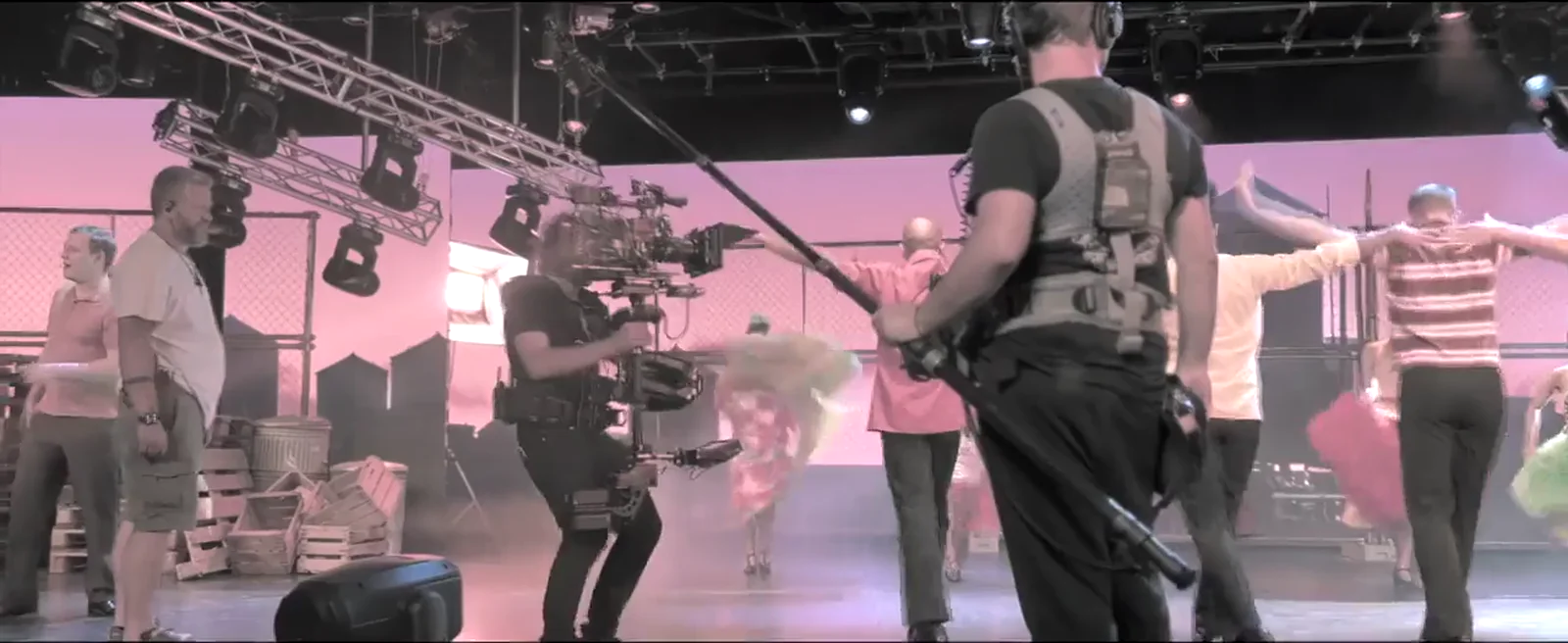
Not accompaniment.The score and the screen,written for one show.
Original music and video content, written for the show and not taken off a shelf. We compose themes, cues and backing tracks on the choreography, then cut the material that travels with the production: screen content for the stage, trailers and teasers for everything that happens around it.
A soundtrack that exists nowhere else
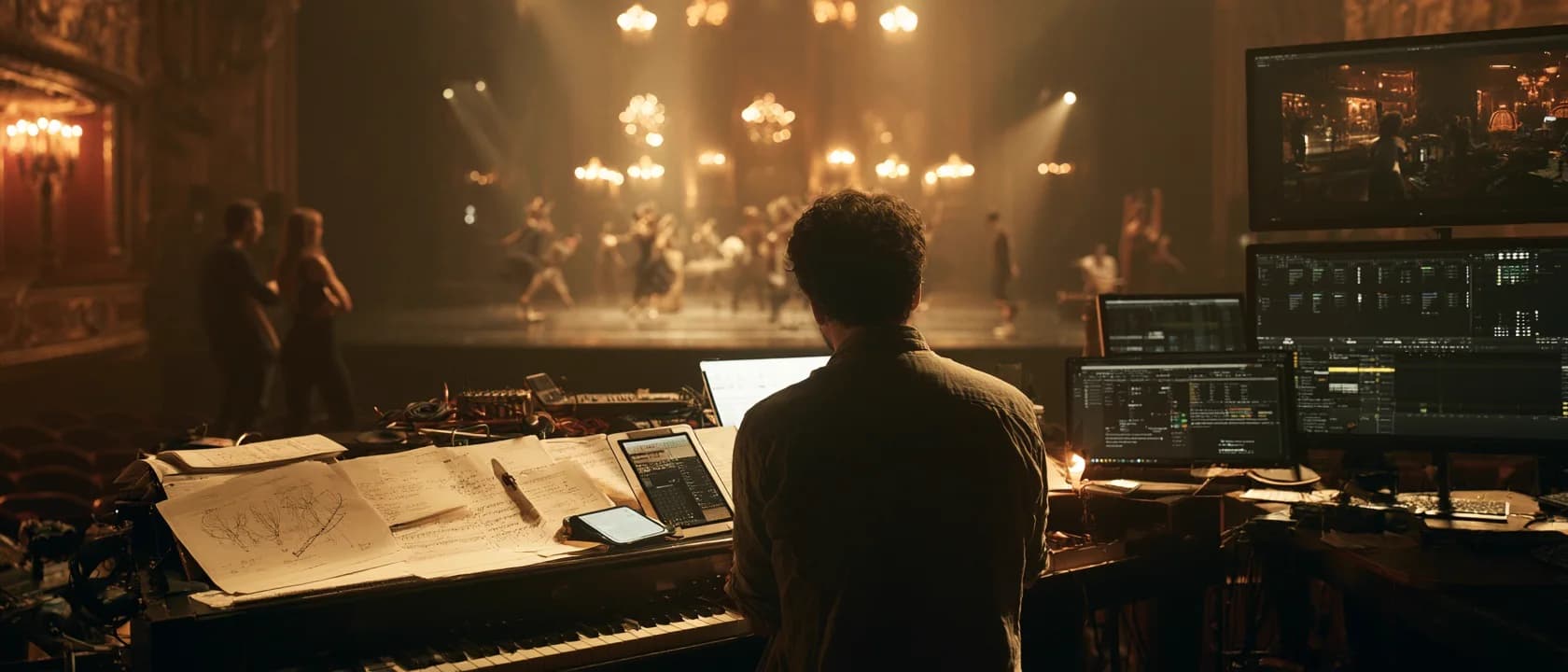
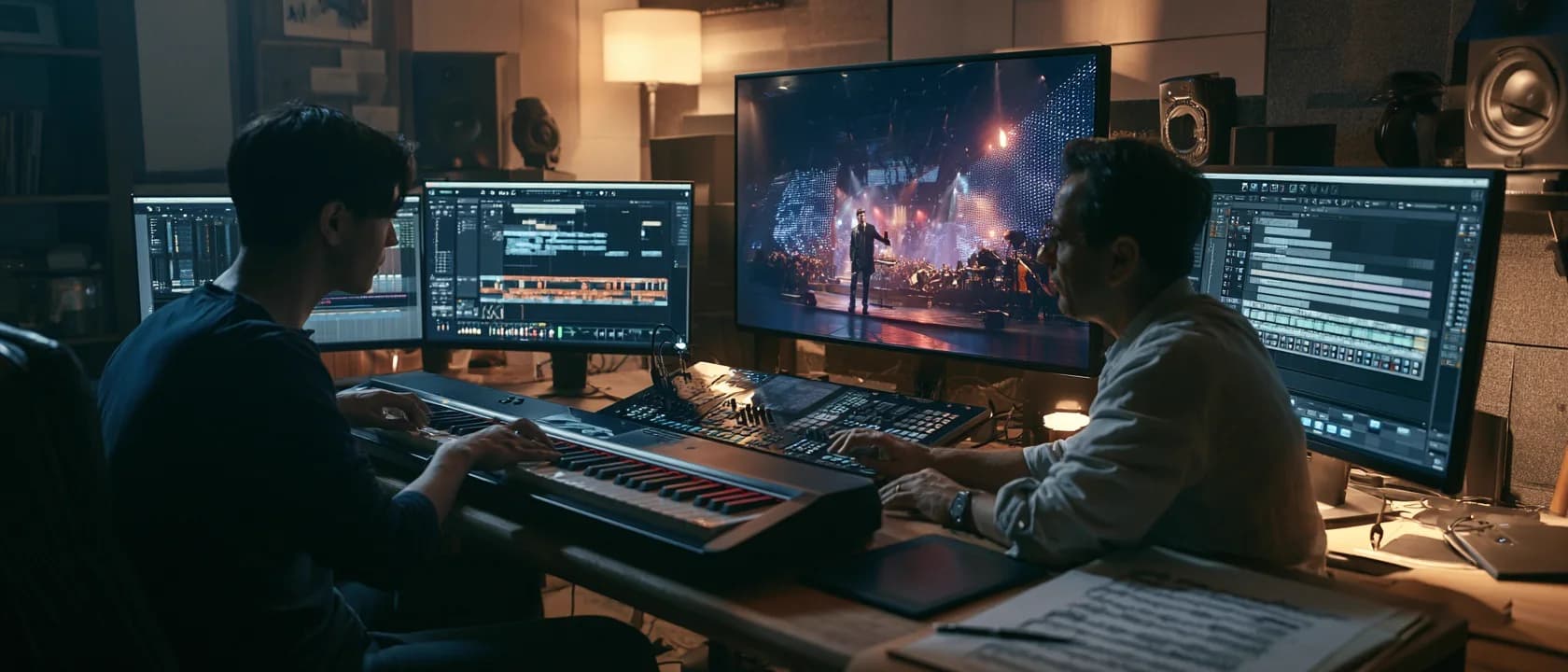
Music is written alongside the show, not laid over it at the end. Themes, cues and transitions are composed on the running order while the choreography is still being built, so a change made on stage becomes a change in the score the same week. Nothing is taken off a shelf, and nothing written for one production can simply be handed to the next.
Written for the voices that will sing it
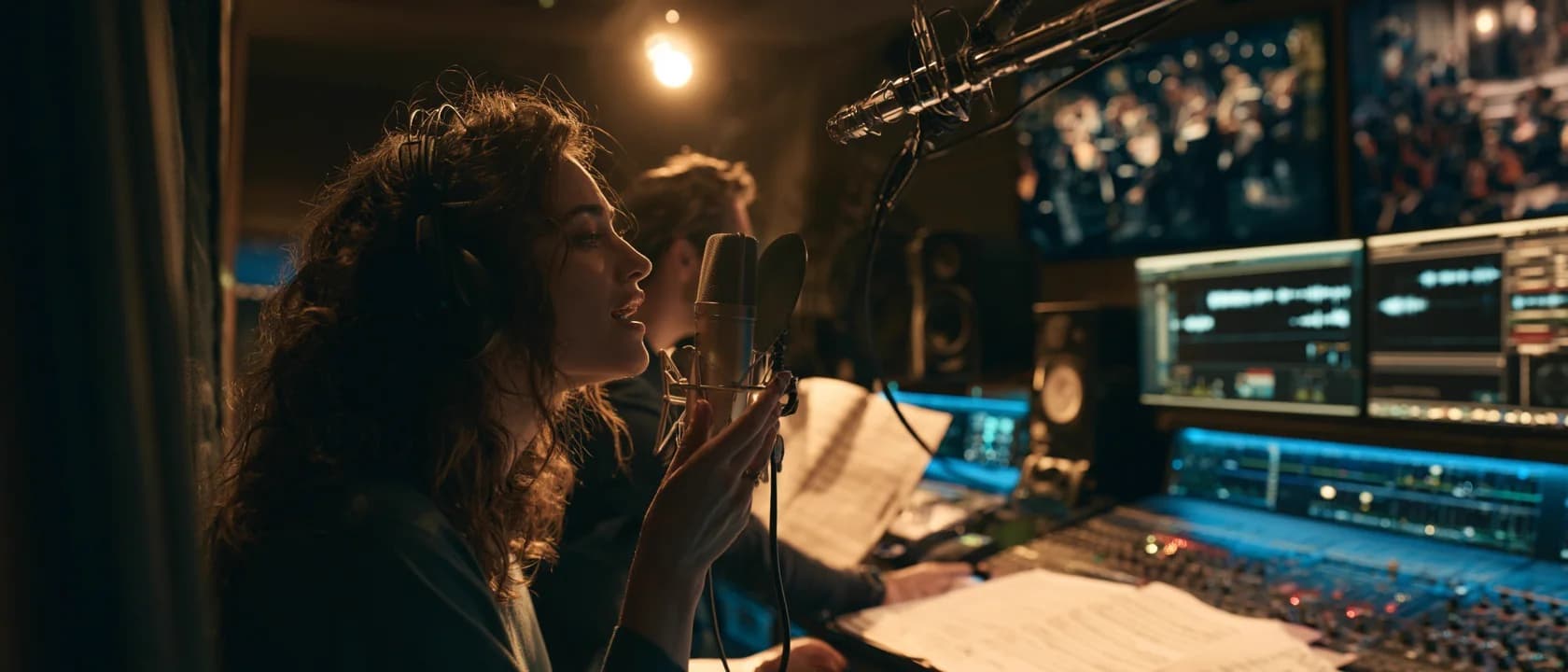
Arrangements are cut around the cast that will actually perform them: the key, the breath and the range of that singer, not of a demo. The voices are then recorded, edited and mixed with the same attention, so what reaches the stage is a finished track balanced for the room it will play in, not a rough that someone will fix at soundcheck.
The world is built before anything is filmed
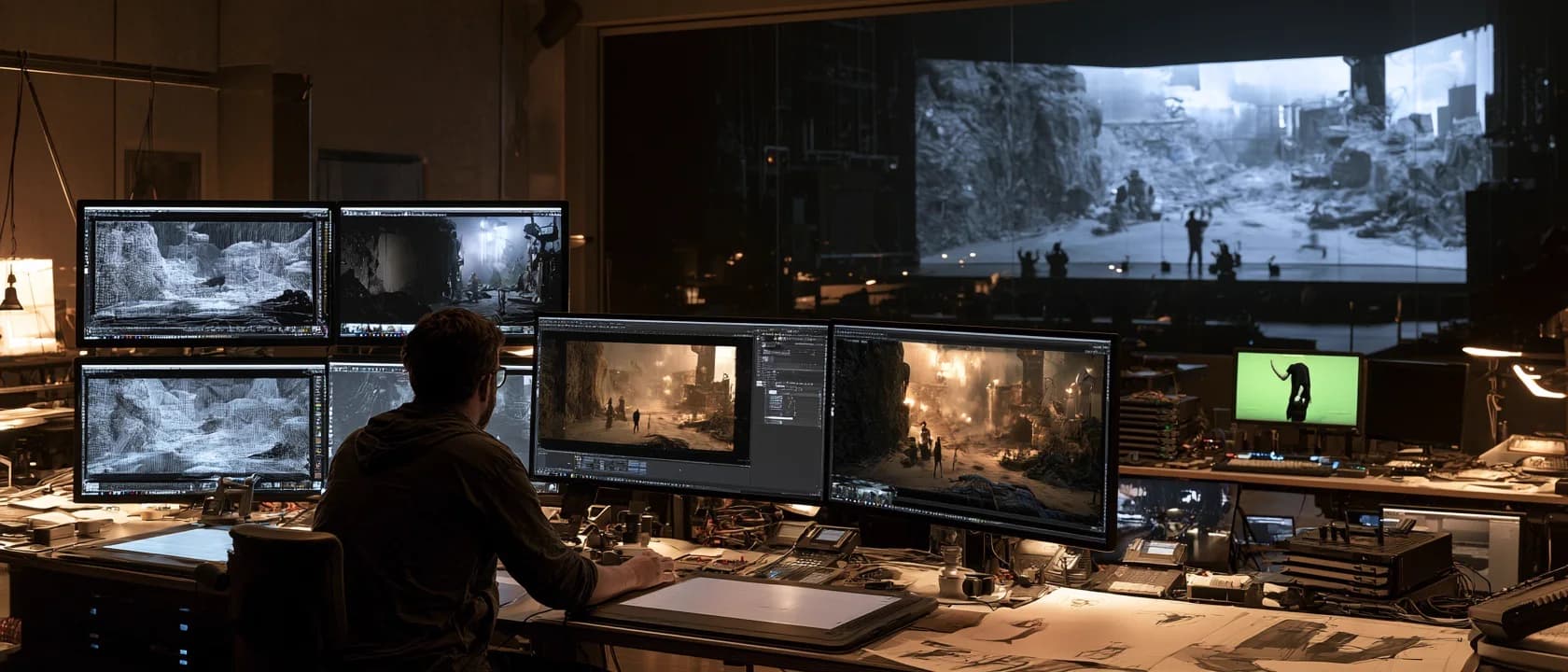
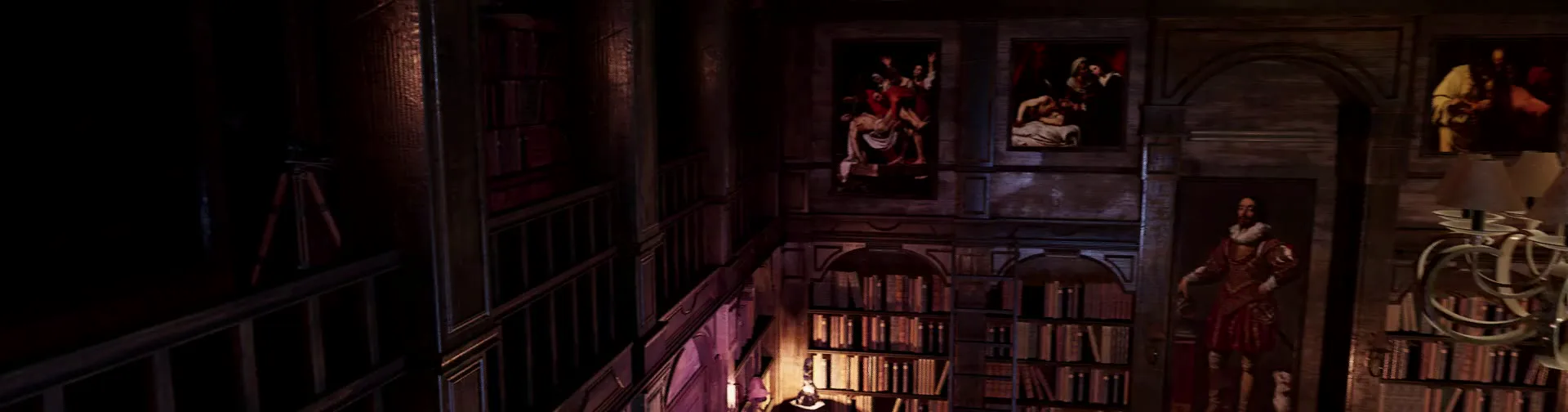
Everything on the screens starts as a model. Environments, props and creatures are built in three dimensions, lit and rendered like a real set, and the same model then serves the whole production: the backdrop behind a performer on green, the wide plate for the main screen, the close detail for a side panel. Building once and reusing everywhere is what makes a full show of original content possible.
Shot on green, driven by the body, finished in post
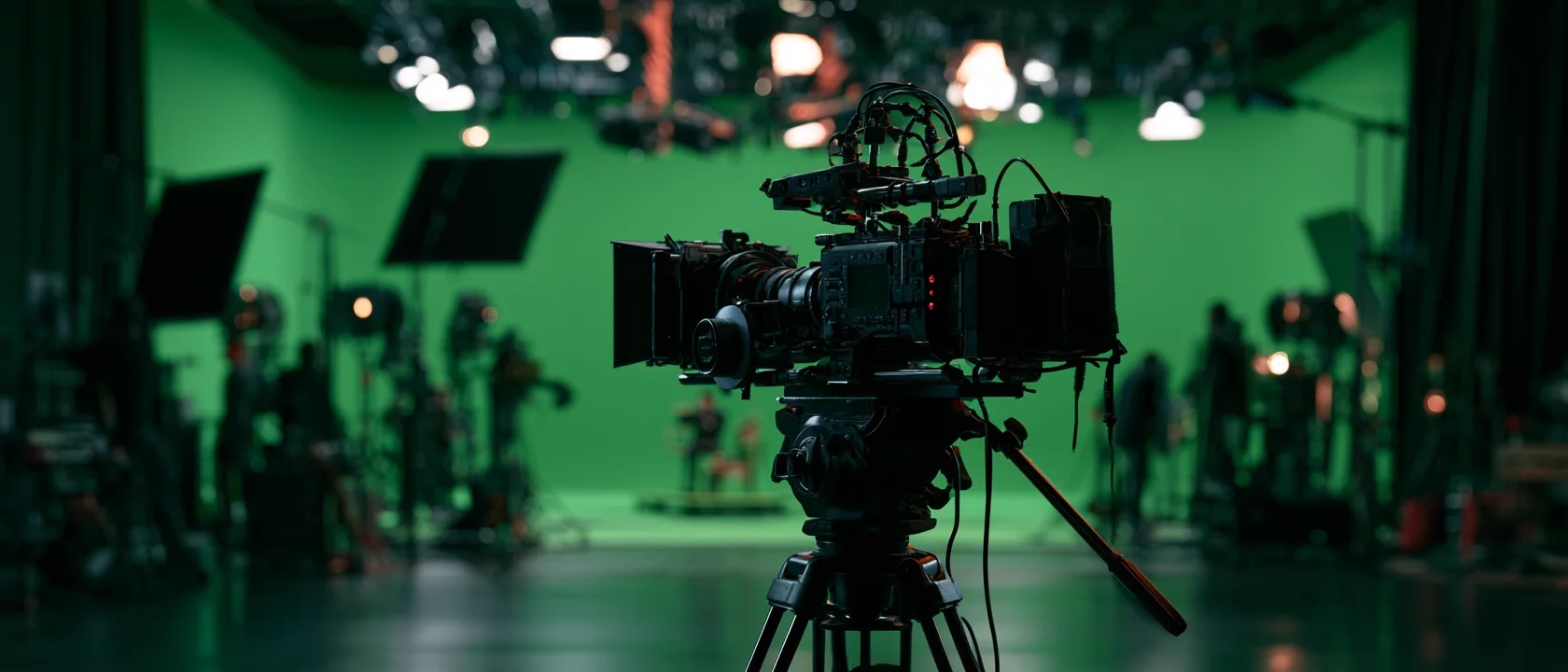
We shoot our own material instead of buying it. Performers are filmed against green so they can be placed inside worlds built for that show, and motion capture suits record the movement that will drive a digital character. Everything comes back into post, where keying, tracking, cleanup and grading turn a day of shooting into a sequence that belongs to one production only.
No render queue between an idea and the stage
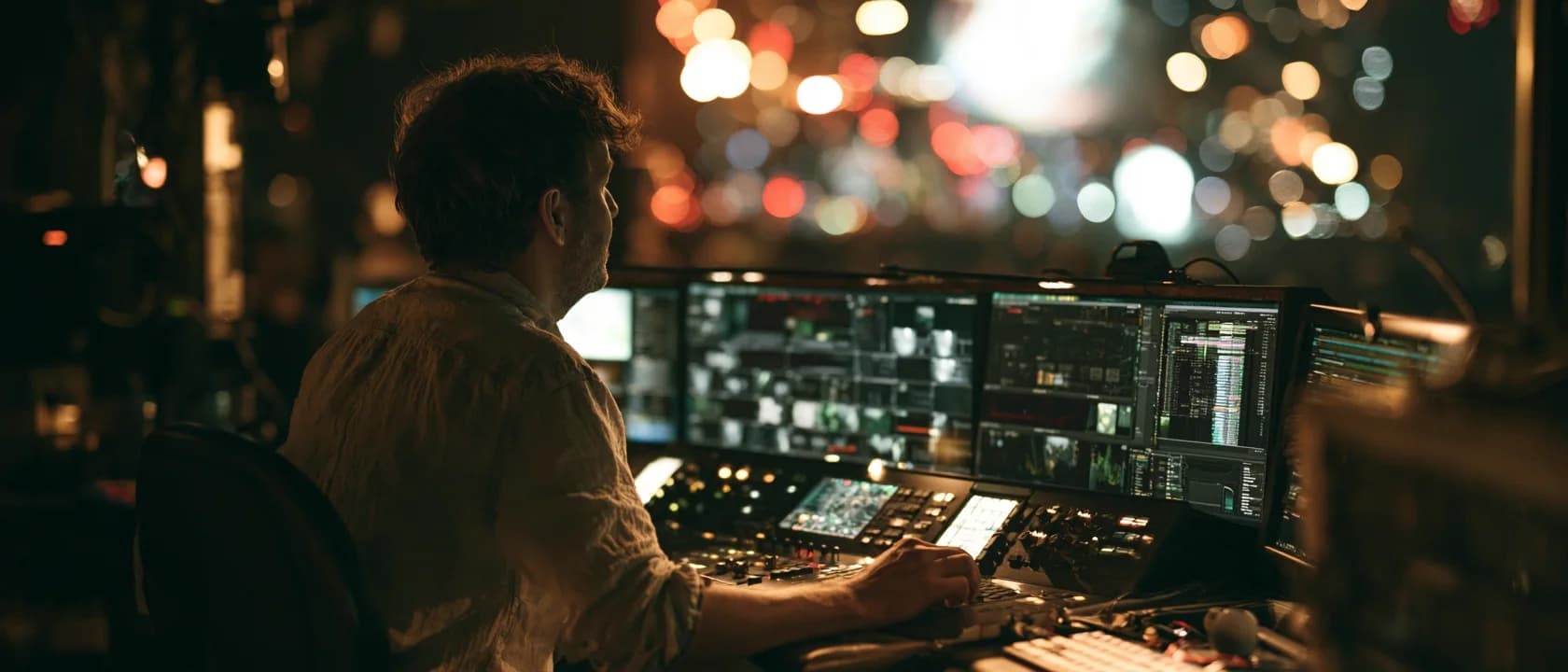
Real time systems such as Notch let complex content be changed at the console instead of in a render farm. A colour, a speed or an entire layer can be reworked between one performance and the next, so the visuals follow what the show is actually doing rather than what was planned months earlier. It is the difference between a film that plays and a set that responds.
The eyes see what the ears hear
Because the score and the screen content are made by the same team, the two are locked together by construction rather than by edit. A cue is not matched to a video afterwards: both are written to the same count from the start. The audience never reads them as two separate crafts, which is exactly the point of keeping them under one roof.
A show is heard before it is understood. Here the music it moves on and the images it travels with are made in the same room: a theme written on a step, a cue that closes a scene, a trailer cut from our own footage. Two crafts, one edit.
Original scores
Composed for one production, from the first read of the script.
Arrangement & editing
Cues, backing tracks and vocal arrangements built on the cast.
Screen content
2D, motion graphics and 3D worlds, exclusive to the show.
Real time rendering
Notch on board: changes reach the stage without a render queue.